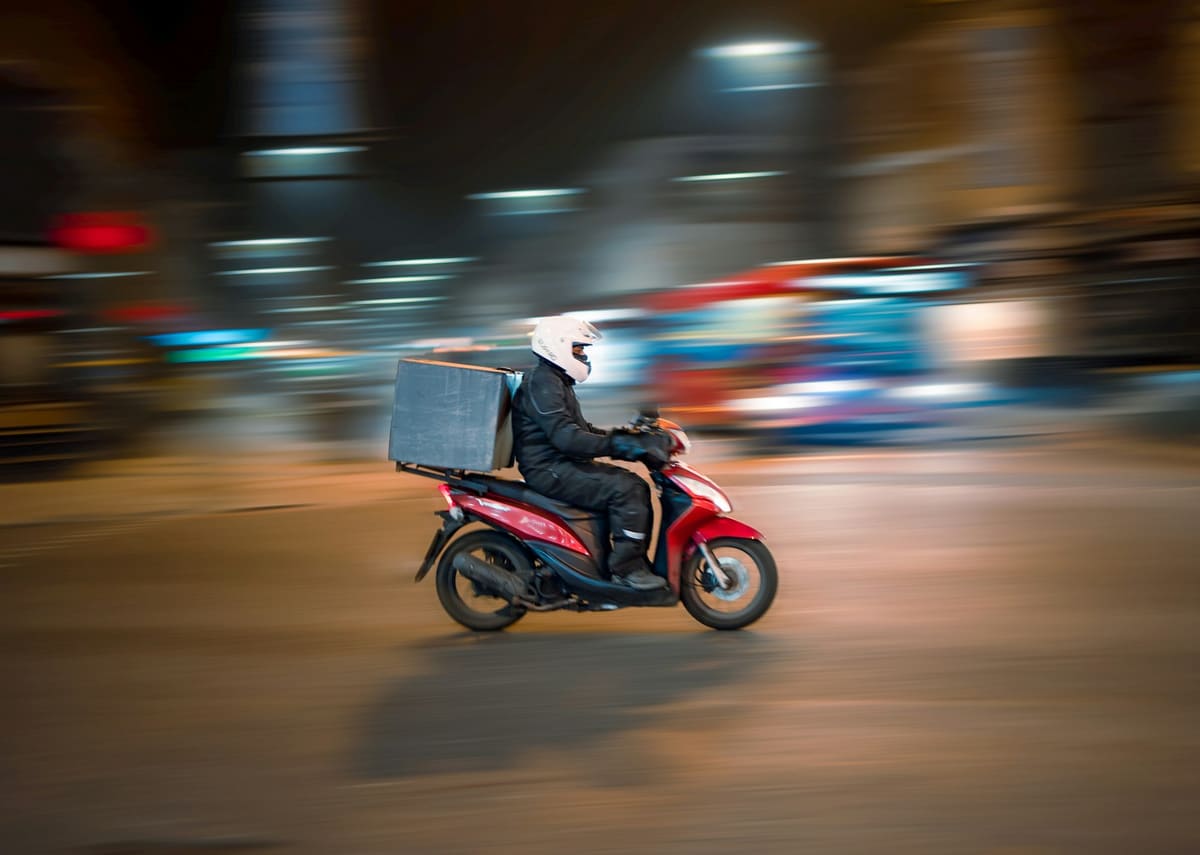
A water-purifier dealer in Coimbatore has an office in Gandhipuram, a warehouse in Peelamedu, and nine service technicians who spend the day on scooters going from one kitchen to the next. For years, attendance meant a phone call to the office at 9:30. "I'm at a customer in RS Puram" was a sentence nobody could check, and nobody tried.
The owner doesn't want to spy on anyone. He wants to know who started work and when, so that salary and overtime are paid on something firmer than a phone call. That's what a field staff attendance app is for, and it's worth being clear about what one can and can't prove before you roll one out.
What a field staff attendance app records
Every serious option does roughly the same four things at the moment someone checks in from their phone:
- The time, from the server, so a phone clock set ten minutes back changes nothing.
- The GPS position, with how accurate the phone says it is.
- An address looked up from that position, so a manager reads "RS Puram" instead of a pair of coordinates.
- A selfie, if the company asks for one.
Facto Lite records all four at check-in. It doesn't track anyone's location through the day, and check-out records the time only. For a lot of owners that's the right line: you know where the day started, and you aren't following people from house to house.
Geofence attendance: how the check works
A geofence is a circle drawn around a place you expect people to be, like the office, the warehouse or a regular client site. When someone checks in, the server works out how far they are from each circle. If they're inside one, the check-in is on site. If they're outside all of them, you choose what happens: the check-in is flagged for review, or it's refused.
Here are four check-ins at the dealer's on one morning, run through the same test Facto Lite uses. Each circle has its own radius: 150 m around the office, which is the default, and 200 m around the warehouse because the yard is big.
| Check-in | Nearest place | Distance | Result |
|---|
| Selvi, office | Office, Gandhipuram | 79 m | On site |
|---|
| Arun, warehouse | Warehouse, Peelamedu | 133 m | On site |
|---|
| Karthik, at a customer | Office, Gandhipuram | 2.7 km | Flagged: off site |
|---|
| Priya, in a basement | Office, Gandhipuram | 31 m | Flagged: low accuracy |
|---|
4check-ins
2flagged for a look
2.7 kmKarthik from the office
Karthik was 2.7 km from the office because he was at a customer, which is his job. Priya was inside the office, but her phone reported its position to within 240 m from a basement, and by default anything worse than 100 m isn't trusted. Both are flagged with the reason, and neither is refused. A manager glances at the address against the day's job sheet and moves on.
The setting that matters most: flag, don't refuse, if anybody works away from your sites. In Facto Lite the geofence rule applies to the whole company, so refusing off-site check-ins would lock your technicians out every morning they start at a customer.
Selfie attendance: what it does and doesn't prove
A selfie at check-in answers one question: was it the right person holding the phone? It stops the most common cheat in a field team, one colleague checking in for another who's still at home.
Be straight with yourself about the limits. In Facto Lite the selfie is a photo the manager can look at. There's no face recognition, so it works as a deterrent that depends on somebody opening a flagged day and looking. The check-in screen is honest about this too: it tells staff their location is captured as a deterrent, not proof of presence. Make the selfie required only if you'll look at them. Asking for photos nobody reviews teaches people the step doesn't matter.
GPS attendance app India: setting it up fairly
Location data about your staff is sensitive, and people will accept it if they know exactly what's taken and when. Before you switch it on:
- Tell the team in writing what's recorded: the check-in time, position, address and selfie. Say that nothing is recorded after that.
- Draw geofences only where work happens. The office, the warehouse, and client sites people visit every week. Leave customers' homes out.
- Start in flag mode for everyone. Look at the flags for two weeks, then decide whether anything needs to be stricter.
- Give a way to fix a wrong day. A dead phone, a missed check-in. In Facto Lite that's a correction request that someone you name reviews, rather than anyone editing the record.
Attendance for sales team on the road
A sales team adds one question a technician team doesn't have: was the day spent selling? Attendance can't answer that, and it shouldn't try. Use it for what it's good at, which is who worked and when, and track visits and follow-ups in the CRM. A lead follow-up system for a small sales team covers that half.
One practical point for people on the move: check-in needs a signal, since the app doesn't save a check-in offline to send later.
Mark attendance from mobile, or at the gate
If some of your people work at one site all day, you might be weighing a reader at the gate instead of phones. In Facto Lite a company records attendance one way at a time: phone check-ins, or a reader at the door. For a mixed team of field staff and office staff, phones cover everyone. A reader only suits a business where almost nobody leaves the building. Attendance from a reader explains how that option works if it fits you better.
Whichever you use, the point is that attendance flows into payroll without anyone retyping it. If your technicians claim fuel for those rides, the expense reimbursement process shows how to pay it per km, and overtime pay covers the long days.