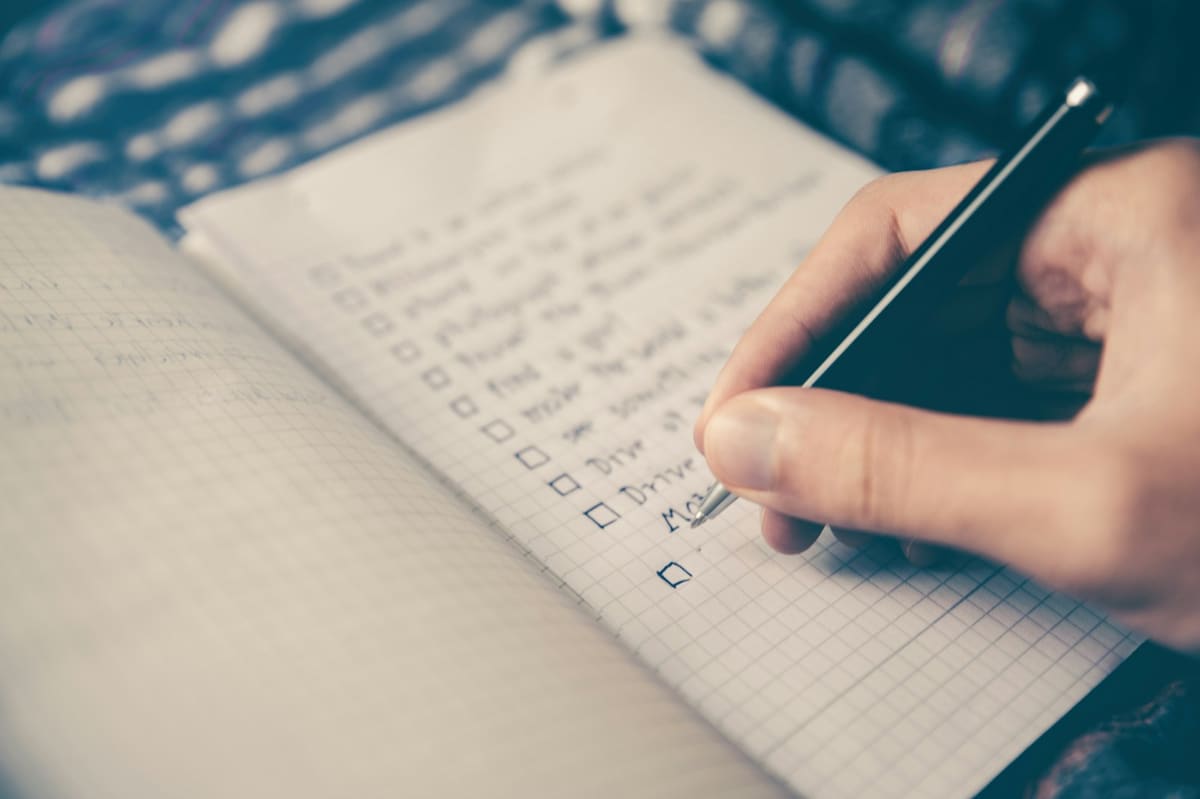
A bakery-café with two outlets in Jaipur opens at 8. Before the shutters go up, somebody at each outlet is meant to switch on the ovens, log the chiller temperature, check yesterday's stock for dates, set out the display and mop the floor. For two years that list was a laminated sheet by the kitchen door with a pen on a string.
The sheet was ticked every morning. The owner found out it meant very little the day a food inspector read the chiller herself and got 9°C. This post is about building the version people complete properly, with one month of the café's numbers to show what it looks like once it's working.
What a daily checklist app for staff has to get right
Paper checklists fail in three predictable places: nobody hands them out on the day, a tick costs nothing to fake, and nobody can see which step is skipped most. Software fixes those only if it's set up for them.
- It raises itself. The checklist appears on the right person's phone every morning without the manager remembering to send it.
- Some steps need an answer, not a tick. A chiller reading is a number. "Stock checked for dates" is a yes or a no, and a no asks why.
- Somebody else looks at it. A finished checklist goes to a reviewer, and only a reviewer can send it back.
- It reports why, as well as how often. "Done 27 times" tells you less than "sent back 5 times for the chiller".
An opening and closing checklist, step by step
Here's the café's opening checklist as it's set up now. Twelve steps, most of them taking under a minute:
- Ovens on and set to 180°C. Tick.
- Chiller reading. A number. The reviewer knows it should read 1 to 5.
- Freezer reading. A number.
- Yesterday's stock checked for dates. Yes or no; a no asks what was thrown out.
- Bread and cakes out on display. A photo of the counter.
- Coffee machine flushed and first shot pulled. Tick.
- Float counted into the till. A number.
- Floor mopped and dry. Tick.
- Washroom checked and stocked. Tick.
- Card machine and UPI stand tested. Tick.
- Staff in uniform. Yes or no.
- Shutter up at 8. Tick.
The closing checklist mirrors it: ovens off, chiller reading again, till counted and matched, waste written down, gas off, shutter locked. Closing is where cash and safety sit, so it's the one to set up first if you only do one.
A month of opening checklists at two outlets
For September, each outlet had one opening checklist raised a day, reviewed by the owner's daughter, who manages both.
| Outlet | Raised | Done by 9 am | Sent back |
|---|
| MI Road | 30 | 27 | 2 |
|---|
| Vaishali Nagar | 30 | 19 | 7 |
|---|
77%done within an hour of opening
9sent back out of 60
23%rejection rate at Vaishali Nagar
The totals say the checklist gets done. The rejections say where it isn't done properly. Each one carries the reviewer's reason, and the reasons fell into three groups:
| Reason it was sent back | Times |
|---|
| Chiller reading above 5°C | 5 |
|---|
| Display counter half empty in the photo | 3 |
|---|
| Floor still wet at opening | 1 |
|---|
What the report turned up: five chiller readings above 5°C, all at Vaishali Nagar. Staff had logged every one of them honestly; the chiller's door seal had gone, and the checklist caught it three weeks before it would have spoiled a day's cream stock.
That's the case for a checklist that asks for a number rather than a tick. A tick would have been ticked. A number went into a report that somebody read.
Staff checklist with photo proof: where it helps
A photo step is the strongest proof you can ask for and the most annoying to give. Ask for too many and people photograph the same corner every day. The café asks for one, the display counter, because that's what a customer sees first and the owner wants to see it too.
Pick photo steps by asking what you'd walk over to check if you were there. For a clinic that might be the sterilised instruments tray. For a shop, the stacked shelf at the entrance. For an office, the server room door locked at night.
Be honest about what a photo proves: in Facto Lite the photo is uploaded from the phone, which means it can come from the gallery, and the app doesn't stamp it with a time or a place. It proves somebody had a photo of the counter. The reviewer who knows the counter is what makes it proof.
In Facto Lite a step can be marked required, and a required photo, number or answer step can't be completed empty. The checklist can't go for review until every step is done.
Recurring task checklist rules: holidays and weekly offs
A checklist that repeats every day will land on Diwali. Decide in advance what happens to it. Facto Lite gives each series one of four choices: run it anyway, skip it, or move it to the working day before or after. The café skips its opening checklist on the two days a year it shuts, and moves the weekly deep-clean checklist to the Monday when Sunday is a holiday.
The other choice to make up front is who gets it. A checklist can have several owners, and when somebody leaves, their open checklists move to a person you name. Don't tie a daily checklist to whoever happened to set it up.
Turning an SOP checklist for employees into steps people finish
Most businesses have a standard operating procedure somewhere: a Word file, a folder, a page on the wall. It's rarely in a shape anybody follows each morning. Turning it into a checklist takes three passes.
- Cut each step to one action. "Check the kitchen is ready" becomes four steps you can each say yes or no to.
- Drop what nobody would check. If a step's answer never changes and nobody would act on a no, it's clutter. Put it in training instead.
- Keep the explanation off the checklist. The step says "Chiller 1 to 5°C". The reason why belongs in the induction, where it's read once, or in one instruction step at the top.
Fifteen steps is a sensible ceiling for anything done daily. Past that, people start ticking without reading. If the SOP has forty steps, it's probably three checklists for three different people.
Checklists sit next to one-off delegated work in the same app, and the two need different handling. How to delegate work and know it got done covers the one-off side.